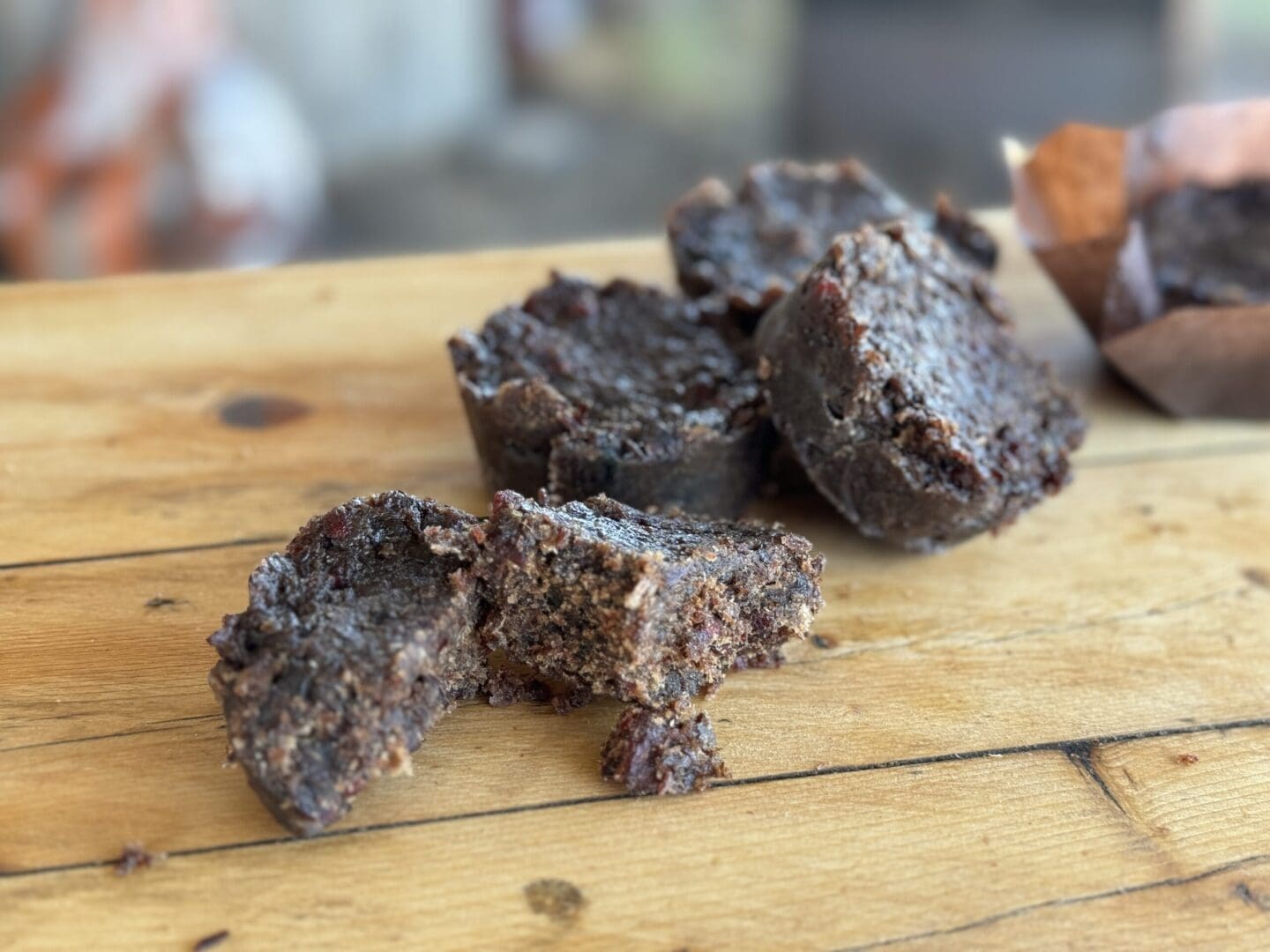
Pemmican
Pemmican is a survival food that dates back thousands of years. Made of dried meat, berries, and rendered animal fat, pemmican has an almost indefinite shelf life. For thousands of years, pemmican aided Native Americans through lean, harsh winters and times of drought and hunger.
Pemmican comes from the Cree word for fat: Pimikan. Native Americans shared this food preservation method and recipes with explorers and trappers, enabling human exploration into areas previously thought unsurvivable. At 3,000 calories a pound, this food could keep people going for months. The Native American recipe for pemmican included chokeberries, which are rich in Vitamin C. This helped to prevent scurvy, solving another problem that stunted human exploration for centuries.
What Type of Meat is Best for Pemmican?
Traditionally, pemmican was made of whatever excess red meat was available. For great periods of history, this meant bison, elk, moose, or venison. I'm going to use a lean beef round roast in this recipe.
Drying Meat for Pemmican
Start with any lean game or beef. Cut off all the fat. The animal fat in its regular form will become rancid. Slice the meat as close as paper thin as you can. Once all of the meat is sliced, dry in a dehydrator or in the oven.
Tip: You can save any good white fat to render down and add back to the Pemmican at the end.
The meat needs to be dry enough to snap when you pull it apart in order to be ready. In a food dehydrator, this is going to take 8-10 hours; in an oven at minimum temperature it will take about 3-4 hours.
Tip: Slightly prop the oven door open with a thick towel to help air circulate and dry the meat faster. If you have a convection oven, use the convection setting and you won't need to prop the door open.
Traditionally, a morter and pestle type implement was used to pound the dried meat into powder. If you have a food processor or blender, you can use modern technology to save yourself some time and sore wrists!
Adding Dried Berries to Pemmican
Most dried fruits like raisins, cranberries, or blueberries still have quite a bit of moisture in them. For pemmican, you'll want to make sure that you have dried the berries as much as you've dried the meat. You can use a dehydrator or an oven. In a dehydrator it should take about 13 hours to get them really dry.
You'll be able to pound them to dust pretty easily, but you can use the blender shortcut here, as well.
Adding berries to Pemmican improved not only the flavor of the meal, but provided essential Vitamin C during harsh winters and drought.
Rendering Animal Fat for the Pemmican
To render the fat, boil the fat until it becomes completely liquid. Strain the liquid fat through a sieve. This is how you make Tallow.
Measure the amount of dried powder you have from the meat and berries, and add an equal amount of tallow. Portion the pemmican out in muffin tins or wax paper, and let cool to room temperature. Tightly wrap and then store in a cool, dry place.
Pemmican will keep almost indefinitely.
It is important to us to honor those that came before us by preserving their knowledge. We never know when information like this might come in handy. We've made it through tough times in the past, and there may be tough times ahead. We are grateful to all of those who preserved these traditions and this knowledge so that we may pass them on to future generations.
As always, Shannon and I thank you for stopping by the website. Please subscribe to our YouTube channel, follow us on Facebook and Instagram, and subscribe to our weekly newsletter. We will never sell your information or spam you!
If you enjoyed this recipe, you may enjoy John Wayne's Corn Dodgers.